Patreon

Tuesday, April 25, 2023

The Long Road to a Fist Game

 Now that the Lone Wolf Fists hardback is on the near horizon, I finally have a little time to write. God that feels nice.

Next time? I'm hiring a layout guy. This was a nightmare.

Today we're gonna talk about the journey to LWF (and Tian Shang in general; we've got starfaring to do soon...)

The History Of Games I Played

Let me give you the truncated timeline of my exposure to Tabletop Roleplaying Games

Around year 7 of my life, my bestest friend in the world (Matt was his name, awesome kid) introduced me to a few important interests that would define my tastes for the rest of my life:

1. Sonic the Hedgehog

2. Spawn comics

3. Final Fantasy IV (at the time called Final Fantasy 2) on the SNES

Skip ahead a few years and I'm listening to the Car's "Just What I needed" and I hit on this idea of playing a game where you're in charge of a kingdom, and you like, promote the random peasants into knights and wage wars with them. I am very taken with this notion and its physical manifestation, so I go on a trip to the friendly local nerd joint and get a Citadel Miniature's catalog from the staff. One of these bad boys with all the lovely pictures of unpainted metal miniatures. 

I went with the Skaven and picked up an even-then-too-expensive box of Clanrats


I kept collecting them for years, but rarely got the chance to play. When I did, I roundly lost.

Somewhere in here I also got my hands on the fantastic Final Fantasy 7, and played it nearly to completion before my little brother saved over my game with a rental game and I had to play it over from the beginning. It's cool; the second time, I played it with him, reading him all the dialogue and going on the adventure together proved to be a lot more fun.
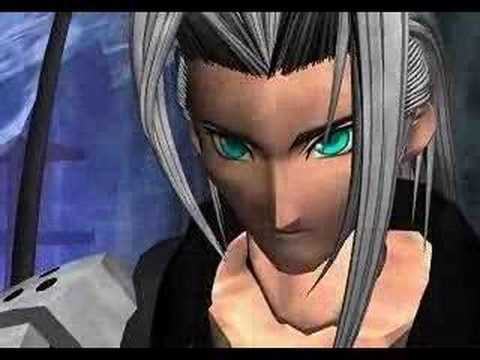
Pictured: a man less dangerous to my quest than my little brother

Skip ahead a few more years and I'm in my late teens and doing everything I can to get out and socialize. My dweeby tendencies and social awkwardness gets me somehow invited to a D20 modern game where I play (what else) a katana-and-trenchcoat badass who hunts monsters. I also get invited to a Vampire the Masquerade LARP, where I decided to play as my version of Moebius from  Soul Reaver 2.

Nye he he!

I pick up a copy of both games whenever I move out on my own a few years later. I only ever ran either game once or twice, because what my friends wanted to play was Dungeons and Dragons 3rd edition.


The unholy trinity; if you weren't running d20 in the early aughties, then you would be MADE to run it

My early forays consisted of my players making clear anime stand-in characters, then me quickly thinking up a cool cutscene-style scene that would have been right at home in a melodramatic Final Fantasy of the time, and ushering them towards making that scene happen. The primary method of interacting with the game rules was combat.

My love of warhammer led me to become increasingly interested in trying to make the big battles happen within the encounter XP threshold of D&D. I was convinced that the creation of a steady diet of balanced encounters was the GM's entire job (The third edition DMG drove this conclusion home like a railroad spike). 

My love of Final-Fantasy-style cinematic storytelling made me think of campaigns as long stretches of "gameplay" that was occasionally broken up by boxed-text "scenes" that progressed the "plot"(the plot being "what the bad guys were doing that would inevitably unleash a big boss for the players to fight in an epic showdown").

My love for Vampire-esque approachable player powers made the restrictive, class-based, on-the-rails, linear advancement of D&D feel increasingly like a straightjacket. 3rd edition had a frustrating habit of giving a a prepackaged character (THIS is the kind of fighter you can be!) and making you wait several thousand XP until you got to play them. Build systems were VERY appealing if you already had a character concept you wanted, with the notable drawback that most of them read like math textbooks.

I misquote Steve Jobs: "There's no SEX in this!"

I didn't have a lot of respect for dungeons at this point in my gaming career. Nor "random" encounters. I didn't see the point in them. I put the stuff in my games that I wanted to be there, and I put it in whenever I felt like it would have the biggest impact. I was a very proactive, editorial style of GM. 

In my quest to find a game that fit my style, I stumbled onto what seemed at the time to be the mother load:


On the surface, Exalted had everything:

  1. It had a player-empowering Build chargen system, which let players make the ludicrous anime protagonists that they actually wanted and allowed me to make the even MORE ludicrous anime villains that I wanted to make
  2. It had a huge power level that scaled, allowing ridiculous battles against armies and huge monsters as well as over-the-top anime-guy on anime-guy super-duels
  3. It was lightweight and usable on-the-fly, eschewing the onerous game-prep of 3rd edition in favor of a breezier off-the-cuff style GMing
  4. Most importantly, IT HAD STYLE. The ART and the WRITING were COOL and made me want to enter creation and kick ass. Selling my friends on this was the easiest sale of my life
No more tedious lists of painstakingly balanced encounters! No more frustratingly restrictive character classes! No more linear, boring dungeons, nonsensical hexes! Actual real rules for conquering and running empires and fighting armies! Social rules that made talking as powerful or MORE POWERFUL than fighting?! Yowza!

The promise of Exalted was, and remains, one of the great promises in all of TTRPGdom. Sucks that it was all a goddamned lie.

The Big Difference between White Wolf and Old School D&D

I was about a year into my first Exalted campaign when I really started to feel the system sag. It was a death of a thousand cuts, but all the minor niggling issues can be summarized very well by the following distinction that every White Wolf game has in common:

White Wolf Games expect the GM to actively manage outcomes

Must... Fix... Broken... System!!!


Which I was already doing, but let me tell you why that is the central failure of TTRPG design. Let me tell you the same way I was told; by learning the Oldest Ways.

The Old Testament


Turns out the third edition of D&D was something of a catastrophe in the culture of TTRPGs. It had effectively taught an entire generation how to roleplay wrong, and nearly all of our troubles with D&D stemmed form 3rd's failures of design.

Let's revisit our four points from earlier:

1. Chargen. 3rd multiplied and compiled several decades worth of scope creep into the core books and shrugged about how that would either make a compelling setting or like... Why anyone would want to play a Dwarf Wizard. It led with system options, but didn't consider whether the options it presented were compelling.

Old D&D was archetypical; the original game had TWO classes, fighting-man and magic-user. And when you really contemplate those two archetypes, they encompass swathes of different characters by folding them into broad approaches to heroics. King Arthur was a lot of thing, but yeah, he was essentially a guy with a sword. So was Conan. So was John Carter, so was Beowulf. "Guy who fights" is possibly THE heroic archetype, which is to say; the detail of HOW and WHY and WHAT YOU LOOKED LIKE was already up to the creator of the character. You totally could look like Cloud and have a big sword, or like Guts and have a big sword, or like Guan Yu and have the Biggest Hittin Stick Ever.

For real though, don't step to Guan Yu


  Same with "magic-user" (archetypically speaking, at least; actula D&D magic was pretty clownshoes). Gandalf and Merlin spring to mind, but "sorcerer" is one of those concepts so woven into all human myth that "weak-seeming guy with mysterious and super dangerous powers" can realistically cover everybody from Odin to Orpheus.

Now, astute game historians will point out that Thief got added to the cannon VERY quickly, as did the OG cross-class Elf and Hobbits and Dwarves and a host of others like Paladin and Bard, Druid and uh, Gnome Illusionist. So the water got muddy early, but the critical thing was the trend towards archetype coupled with a system whose lightness encouraged hacks for more specificity.

2. Scale. I kid you not, old school D&D characters could rise to powers that rivaled greek myth. Scouring battlefields single-handedly was legit a thing that could be done, be it with awesome magic or Achilles-style through sheer asskicking. Since D&D's roots were the Chainmail wargame, mass combat was natural to the system. And as for gigantic monsters; well, what's more gigantic than a dragon? It's even in the name!

The remarkable thing was just how dammed simple the scalability was; it was your Hit Die. that was it. The major character resource was "not dying". Which, when you think about, you pair that with "ability to kill the foe more efficiently" (gained either through increased damage and to-hit, or through a growing library of deadly spells) and you have the engine that scales characters from heroes to gods. Why was your fighter a demigod of battle? Because he refused to die with a hundred arrows in him and laid waste to his enemies, duh. Hit dice and THAC0, people; it's an ingenious little engine.

Third edition added a lot of bells and bobs to this simple, elegant little engine and obfuscated its genius.

3. Lightweight Engine. There's little that's lighter-weight than OG D&D. Clocking in at a whopping 112 pages split over three tiny leaflets, the OG game required you to hack it for it to work. It was hackable by design, approached the way its creators approached it; like a hobby, first and foremost, rather than a game product. Later compilations and revisions would retain this lightweight format for quite some time, with the Basic edition not even cresting 50 pages. It wasn't until Advanced Dungeons and Dragons that we got the heftier hardcovers that would become synonymous with D&D. 

Critically, the rules-light style would be retained even in the hardbacks all the way through Second edition. With core systems and character classes, monsters, etc. taking up very little pagecount. Although dense with options, tables, monsters, magic and the like, the actual systems were bare-bones, flexible and deeply hackable, keeping D&D's signature "archetype" approach that allowed GMs to craft their own monsters, adversaries, special classes, treasure, etc. for their games.

3rd edition replaced this option-heavy, rules-light framework with a nightmare of interconnected subsystems that relied on constant, deep-design tinkering to fir into their "encounter balance" framework of running. I felt like I needed a degree to design a satisfying adventure in 3rd, where in 2nd and before, you just needed imagination and something to draw a map with.

4. Style. This was the most woeful and tragic loss. dungeons and Dragon 3rd edition was where style came to die. I'll let its art speak for it.


And I'll let the OG D&D art speak for it's editions:


Yeah I bet you expected the red dragon, didn'tcha? Fuck you, this is the real shit. This art has a soul. Its compelling and makes me want to run the game.

How you could lay eyes on the unique creative visions of dozens of talented, visionary artists and come away with "You know what WE need? Some brown renfare bullshit with Absolutely The Worst character designs we can come up with!" is a nauseating thought process to attempt to recreate.

You may have ONE Trampier because you've been good

So I'd been mislead; turns out, D&D was fucking radical and already did everything I wanted, just not in a way that I had been trained to think about TTRPGs. Turns out balancing encounters was a joke that should just be thrown out the fucking window; hooray! Most characters could be approached archetypically, doing an end-run around the need for a "build" system! Dungeons and Hexes allowed me to program flavor and setting information into the fabric of playing the game if used correctly! Conquering armies and ruling empires was seamlessly integrated from the base conceits of the game! Social Systems were better handled by talking in character than by rolling dice! Yowza; why didn't anyone tell me what D&D ACTUALLY WAS ALL ALONG?!

I started running in the OSR style and it fit me like a glove. In the decade I've been running games this way, I have yet to feel the sag.

And that is due to the greatest triumph of early D&D, and the essential Triumph of TTRPG design:

D&D expects GMs to manage setup and Players to manage outcomes

What is the difference here? There are a lot of subtle little pieces that add up to the two divergent philosophies, but it boils down to this:

  • In D&D, the game trusts in its predicted outcomes
  • In White Wolf games, the game does NOT trust in its predicted outcomes
In other words, D&D builds its engines to reliably produce outcomes that it wants. I cannot fathom the reason why, but White Wolf does not do this.

I suspect it is because White Wolf designers are largely riding off the genius or Mark Reign Hagen, who did design this way, while they lack that capacity.

Let me show you what I mean. Here's the health track from Vampire: The Masquerade. A game in which you are a corpse who is animated by carnivorous magic, whose body is an object, rather than a living vessel for a living soul:


A normal human being's health is about 3 boxes, and the wounds are steeper, as they're crippled by pain and shock. Your "superhuman" endurance is the result of not feeling pain and running your body into the ground like a machine, literally fighting until your bones are pulped or you're burned into ash.

Note that slash, versus the x? That's because you have to go through this tract mutliple times, as bullets and knives which would kill a mortal merely puncture your insensate corpse-form. 

The result is incredible fights where mortals struggle to do meaningful injury to your unfeeling body while you tear apart their bleeding, pain-vulnerable frames with your sick vampire claws.

Here's the exact same goddamn thing in Exalted second edition.


Note that although there are more boxes, you actually start with just the 7 (0, -1, -1, -2, -2, -4, Incapacitated) and the rest are marked out until you get a special power that lets you get more. 

Here's the thing; you don't really deal with damage the same way a vampire does, because you bleed and when you drop, you bleed out instead of entering the mummy-like state of Torpor. So a sword is just as deadly to you as sunlight is to a vampire; effectively, you have seven hit points, and every hit point after the first reduces your capabilities as you're incapacitated by pain and trauma. Finally, most weapons can do enough damage to you in 1-2 hits to drop you.

The result of this is a combat system whose numerous rolls and derived rolls serves the same ultimate purpose as a single attack/damage roll in D&D; its a deadly game where fighting is wisely avoided because a single sword swing can kill you.

But this system doesn't add any new information; its result is a 1hd fighter. It just gets there through a system which was designed with a completely different game in mind!

The real insult is that you never really get any more hit points! Imagine if your 1hd fighter rolled a magnificent 7 on his d8 at first level, then proceeded to roll 3's until he hit his maximum lifetime total of HP he could EVER HAVE.... And it was 19 hit points.

Now imagine if damage scaled up quadratically with each level. That's the system-outcome of EX2. EVERY character is a glass cannon with a lifetime ceiling of about 20 hit points.


EX2 attempts to solve this self-imposed killability nightmare by substituting the game's mana system Essence for your HP. They go about this in quite possibly the dumbest way imaginable; they make you invincible if you use a special defense, aka a "perfect defense".

But because of course that's a terrible idea, they fob off the responsibility of their idiot-design to YOU, the gamemaster! Because you have to judge if 

  1. The player even CAN use their system-salvaging band-aid defense, due to it needing to posses one of several flaws that forces them to only use it in certain circumstances. I will remind you that players will absolutely die if you do not say "yes" to their use of ANY perfect defense and it will be entirely your fault, according to the game's designers.
  2. If their overwrought description of their actions was "fun" and "exciting" ENOUGH to qualify for a Stunt, which grants them juuuust enough Essence to pull off their perfect defense "for free" if they get it. Again, if they run out of essence and cannot use their perfect, they will die and it will be solely your fault, according to the game designers.
Compare this with D&D

I've got yer Ox-Body Technique RIGHT HERE


For a first-level character, their Hitpoints are determined by the roll of a single die, often a d4 or d6. The damage output of a dagger is d4, and a sword is d6. In other words, the game has explicitly told you that fights are a coinflip and you should avoid a straight-up battle when you can. This encourages caution in players; they ask for detailed descriptions of their surroundings (which are often dark, monster-filled dungeons). They approach foes carefully, lay traps, think outside the box, spring ambushes, light fires, repurpose dungeon traps, make judicious use of arrows and spells, and otherwise play the game like a tense and dangerous death-simulator.

In so doing, they gain player skill. These strategies will continue to serve them well in this campaign and in others, because they work in real life. The advantages of skilled, strategic play are only compounded once they gain and additional d6 hit points... While swords remain static in their damage output.

This means that fair fights become more viable as characters advance in power. D&D characters can be more bold and heroic than Exalts, because their margin of error increases as they gain power. The system's outcomes give you what the game advertises.

The wedding of player skill and character capability is eloquent and effective. By playing the game, you master the strategy of effective combat while your options for what counts as "effective" broaden.

...


The Long Road to Idiot Punch Games

Much like my journey to LWF, this entry has taken longer than expected.

Exalted didn't leave me, even when I left it. I want to be clear on this; for it's failures (which were miserable), its successes were great. It did something that even my newly-discovered OSR simply did not do; it let me play my dumb, overwrought Anime bullshit and it made it rule. 

As much as the combat system was broken, this was true; when you swung around your Buster Sword, the world trembled. When you unleashed your bullshit limit-break Anime magic, something fucking rad happened.

I don't want daiklaves in my game, I need them

Getting the feel of Anime right in a ttrpg was a triumph, however imperfect of an execution it was.

D&D did a lot right, but, to misquote Steve Jobs again, it did not have any sex in it. It had plenty of style of its own, but it was the brusque, pulpy style of Conan, not the grimy, surreal horror of Berserk. It had the mythic heroics of Aragorn but not the stylish brazenness of Utena. It had the cursed heroics of Elric but not the mind-bending scale of Vampire Hunter D. It was The Lone Ranger and I wanted Trigun.


Same guy


The road to my game rose form a desire to wed the sexiness of Exalted to the focus on outcomes of older systems like D&D.

Old Lessons:

  1. The system has to give you the outcomes that it promises
  2. Character survivability must increase at a greater rate than damage output
  3. Elegant, hackable stand-alone rules are to be favored over interconnected systems
  4. Generating content (dungeons, hexmaps, characters, monsters, treasure) should be mechanically easy and reward creativity and imagination
  5. Appeal to archetype while allowing room for GMs and Players to add specifics
New Hotness:
  1. Style Matters. The vision of the game is the cornerstone on which the success of the design rests. It has to look the part.
  2. Feel Matters. Its not enough to get to the outcome you want, it has to feel right getting there. Speed and acrobatics should feel thrilling, punches should impact hard. Concrete should crack when you smash an enemy into a building.
  3. Solid Things are made up of Lots of Little Pieces. Characters, settings, artifacts, etc. should be made of a collection of smaller bits of design, to encourage modularity and for ease of use. Different mixes of bits will produce different outcomes, which is exactly what we want.
  4. Social Mechanics are Explicit. Yeah roleplay is great, but have you ever crushed a political opponent's will under the sheer weight of your dice? It rules and we cannot put this genie back in the bottle. Social Rules are a thing now.
  5. The Cool Things You Can Do Are Specific. You can ignite volcanoes with your fist; it specifically tells you how on page XX. You can lift cars with your mind; here's the power that does that. You can punch a tank shell in midair and it explodes and here are the rules for that. The rules have to articulate how you get to the awesome, over and over again, for as many types of awesome as possible.

Fist Game, Arise

Lone Wolf Fists should, ideally, do everything listed on those ten points above (and a lot more I don't have the energy to type presently). Does it? Well, why don't we look?

Can I sell this to my friends?

I have yet to fail to sell the premise of this game to anyone. "You're a super-power martial artist in the post apocalypse"

Can I make my game like (insert nearly any anime)?

surprisingly, not as much as I'd want. I would have had to even further increase the number of kung-fu techniques in the game (and there are over 200 last count) to really go from Astro Boy to Bleach. I'd say its less in terms of bein universal, and more in terms of your options being seriously cool and very specifically letting you do one of a handful of Anime very well.

Give us the Astro Boy RPG, you cowards!!!

For example I'm not sure specifically how you'd do Goku; a lot of Kame Senin style is in the Brotherhood of Freaks styles, while your Kaokens and Genki Damas are sprinkled in other styles. But of course, Goku has been gaining new Techniques since he started his career; it seems like he started as a relatively straightforward Strong Hero with the notable ability to turn into a giant ape during the full moon (a power which is NOT present in LWF, but WILL be present in All Above Heaven).

Pictured: The future!

But Kenshiro? Yeah you could do him. He's the archetype that the Five Star Spirits were built around. Likewise, most of Ken's allies and even most of his adversaries can be built with minimal fuss.

They put the building-battleship in the poster!

So, can you build THE EXACT anime character you want? No, not from concept; a lot of Anime characters, especially the best, are built out of their history and are first-in-class heroes which would be best created with scads of XP and with unique powers not appearing in this game.

But could you do almost everything in:

  • Trigun
  • Vampire Hunter D
  • Fist of the North Star
  • Akira
  • Princess Mononoke
  • Nausicaa
  • Castle in the Sky
  • Berserk
  • Demon City Shinjuku
  • Ninja Scroll
  • Avatar: The Last Airbender (not an anime, but made The List)

I feel like that's a pretty decent swathe of badass stuff to have realized.

Does it feel like anime?

Yes; It feels awesome to do that stuff. When you fistfight a tank to death with ancient, extinct kung-fu, it feels like you did that. It's not so abstracted that it's just an attack roll and it's HP hits 0. There's enough mechanical realization of the affair that the interaction feels consequential. Also, the interaction is fucking consequential because it's main battle cannon has explicit, detailed rules for demolishing buildings and reducing battalions of troops to chowder. So sweeping that off the battlefield is an actual victory that can turn the tide of battle.

Floating around with an airbending-style martial art feels and plays very different from the rock-lobbing, stone-cracking earthbender-style kung-fu.

When your sword sinks into your opponent's flesh and they erupt into a cloud of shrieking, clawing bats, that feels way different than their skin hardening into stone, or them parrying with impossible speed or vanishing ghostlike as your blade hits a stump.

Tink!

It's aesthetics and the feel of the rules are synchronized. This thing sings in play.

This book is huge! How much boring system crap do I have to learn before I get to the cool?

Actually, almost none. One of the biggest points I learned from old school systems is that simpler is better. 

Things like the move-and-act action economy and initiative should be immediately familiar if you've played any version of D&D. The pain points, ie the stuff you won't find in D&D, winds up either being fun, intuitive, or both.

Effort AKA Matching Dice: Instead of the d20, you roll a pool of d10s and match like numbers into sets. This is the basis of your actions

Health Levels and Aura: A combo of Health Boxes and Hit Points; a box filled with HP, when its filled with damage, you take a wound called  Imbalance. aura is the same thing but doesn't wound you as it fills up; kind've a magic force-field.

Techniques: Your powers, work a little like spells. Do something for a cost in magic go-go juice. Linked to certain limbs or items, you have to keep those limbs/tools working to use the powers.

Chakra, Prana: Yadda yadda magic. Everyone has seven Chakra, which produce Prana, which you spend to make your Techniques work. You can flair up to get access to more Prana, but it attracts attention (dangerous in the post apocalypse!)

Imbalances AKA wounds: When you take enough damage you get an Imbalance, which takes out one of your limbs so that you can't use it to wield weapons, or move, or use Techniques. 

Another thing that's not strictly unique to the game but diverges a bit from oldschool design are the Effect Charts. But these will be immediately familiar to fans of FASERIP, or most modern skill-system games like 3rd edition onward, or even Exalted 2nd edition if you look at the right bits:


All these do is benchmark what you can accomplish with a set of sufficient size. So like, three matching dice are clearly better than two matching dice, and the Power Effect Chart gives you what those dice can do if you're using them for strength, while the Agility Effect Chart gives you what you can use them for in terms of speed and dexterity.

Techniques can be used to boost this use of your Effort, so your kung-fu can allow you access to superhuman feats. This is one of the "intuitive and fun" bits of design; players love looking up how heavy of a thing they can lift, or how powerful of a ghost they can summon. The lists are poppy and neat, and one of the real gems of the game's design.

All of this is to say; there are a few things to learn, but they're not much heavier than their introduction here. MOST of what the book does is serve as a guide and reference document to answer questions in play, so the initial read is really quite light.


The End...?

Lone Wolf Fists was never meant to balloon into as a big a project as it became. Originally it was going to be a svelte 70-page post-apocalypse version of All Above Heaven. Man, I wish I'd known it was going to turn into a 320 page tome All Things Fist.

But much like this blog entry, which meandered crazily and ate an entire day of my precious spare time, Lone Wolf Fist had to grow to the size it had to be and do what it had to do.

The wedding of Exalted's newschool sexiness with Old School design sensibilities meant research, it meant lists of options, it meant much more robust testing of the core system (and some overhauls that I wasn't anticipating). It eventually meant a successful Kickstarter (right after a totally failed one). And now?

Well, its a few years past when it would have been some hot sexiness to release a game like this. In the intervening time, 5th edition came by and swept up the entire gaming scene. Critical Role came and went and came again, to the point they have their own cartoon series that clearly stole a bunch of Avatar's talent.

People don't really talk about Exalted like they used to; the scene is not thriving. Third edition went in a very different direction from previous editions, and it's clear that although its built-up goodwill was enough to clear early sales hurdles, that its struggling more than its predecessors. 

The new wave of 5e players confuse me as to what they want; this is an actually new generation, approaching the game with sensibilities that are alien to me. They seem to like the idea of the game, and appreciate its revolutionary sentiment, but these people don't have the gamer background that my audience had. They came swept in on the winds of theatre-kid-style shows and remarkably different media consumption habits.

For better or worse, my unwashed weeabu culture of gaming has changed into this glittery cottagecore version, where everyone is super queer and colorful and saying things like "Vibes" to one another. Also, I guess "queer" isn't a slur now? That shit would get you punched back in my day.

Does Lone Wolf Fists have a home in all this glam and good vibes? I honestly have no idea. I've been in a cave of dedicated design for the last few years, and I've emerged into a changed world. I thought we'd have a ready audience of hungry Exlated players, still jilted by the story-gamey approach of EX3 and ready to get their fists on something more in line with EX2's sensibilities. I thought we'd have more weebs weebing it up, sperging as one does about all these anime' references and excited for a really good Fist of the North Star game. Nobody cares Fist of the North Star anymore! Apparently My Hero Academia is the new hotness? Jesus I fell off around Bleach, how long was I out? HOW LONG WAS I OOOOUUUUUT

So, I dedicated a not inconsiderable chunk of my life to a game that totally succeeds in doing wat I set out to do.... And I'm not sure that there's an audience for it anymore

But, maybe I'm wrong.

The other option is that my optics have eroded in the last few years. The idiot culture war (which I guess is still raging, but I care even less now than I ever did) did a number of TTRPG players; splitting us into political camps introduced a horrible tribalism to the already elitist and factitious culture of sneering elfgame players. I've been decried as both a communist and a fascist, called a racist, called a chud, called a brainless snowflake, and otherwise had my good name dragged through the mud by every tinpot rpg-pundit who decided political bloviating was more important than, y'know, playing fucking elfgames.

(Ironically NOT by THE Rpgpundit, who has always been a super swell guy to me)

Maybe I just need to get better at talking to elfgame players in their elfgame spaces. Well friends, this is my first little handshake to you in a while. Hi. I make punch-games. And also I'm not any of those awful things. I'm not a bio-essentialist (whatever the fuck THAT is), I don't hate gay people. I'm not a communist. I don't like Nazis. I'm certainly not a racist (except against Canadians, but they know what they did).

I just make games. And maybe you're in the market for one of those. Well my gender-non=specific buddy, have I got a hell of a game for you.

Maybe grab the free version first, give it a pick-through, maybe try it out. I'm going to upgrade this with the newest design soon, but this will stay the same link and at the same low-low-price of nothing except what you want to shove in my tip jar.

And if you want the full monty, it's super cheap right now and it'll answer all the prayers that EX3 failed. Go ahead; Gamble a Stamp on the sickest game you'll ever run!

Disclaimer: hair on chest may vary


Friday, March 3, 2023

Revisiting Dharma, Kharma, Karma, and FASERIP

I’ve finalized all the way up to the very end of chapter 2, and here I’ve stubbed my toe re-reading the advancement mechanics (or, more familiarly, the “XP rules”) for Lone Wolf Fists. The system is simple enough, but on this rereading I found myself, as I often do as a game designer, plagued with doubt almost to the point of utter despair. 


This isn’t an uncommon feeling for a tabletop roleplaying game maker, so no need to be concerned; we eat soul-shredding doubt for breakfast (right next to our favorite cereal, depressi-o’s and a tall glass of imposter syndrome: it's all a part of a balanced existential crisis). 


Anyway so I’m sitting there woofing down my depressing breakfast and contemplating the XP rules. It's no secret that my game has stolen liberally from (I mean, “been inspired by”) the Marvel FASERIP system (FASERIP being an acronym of the game’s statline for characters; Fighting, Agility, Strength, Endurance, Reason, Intuition, and Psyche) .That game’s XP rules were inspired and straightforward; let me give you the rundown.


In FASERIP, the dilemma was to differentiate advancement from the traditional “gather loot and kill monsters” incentive system used by the big TTRPG of the time: I don’t remember what its called; Delvegeons&Durgon? Anyway the name isn’t important, the IMPORTANT thing is that it was dealing with characters that fit a comic-book mold of heroics, and loot acquisition didn’t really compel the likes of Spiderman or Professor X. Although they laid out entire trauma wards of henchmen and matched muscle with supremely nasty villains, none of these things could be said to be their core motives.


Dwerrors&Dirtpike characters were assumed to have a certain mercenary, or at least materialist caste in the vein of Fafhrd and the Grey Mouser, Conan or even John Carter of Mars. Vanquishing enemies, acquiring gold and building keeps in the savage chaos-filled borderlands WERE heroics acts for them. They were frontier heroes; their brand of heroism assumed a hostile world that needed to be battled then civilized, and wealth acquisition was critical for every frontier hero from Beowulf to Wyatt Earp. 


Marvel characters lived in New York City; their heroism was about protection, not conquest. They were champions of the status quo, only being considered heroes whenever contrasted with bad actors who wanted to do crimes. 


This is, by the way, one of the reasons a hero like Spider-Man was so compelling; his material situation never improved, not until he became a professor and married his teen sweetheart anyway. But all his heroics didn’t help that; getting a job and growing up did. Spider Man was a hero despite its personal costs to him, but the world he fought for was one that rewarded him with material comfort, security and even true love. That was a world worth fighting for, a status quo worth upholding, even if the short-term cost of his heroism was personal loss and suffering.


The XP system of FASERIP, called Karma, captured this difference by placing MORALITY, specifically the Marvel-brand comic-book morality, as the criteria for XP acquisition. Characters were expected to prevent crimes, bring criminals to justice, stop wicked conspiracies, save people (even villains!) from injury and death, and uphold their personal and professional obligations. They could also act charitably and make personal commitments, granting villains outstanding opportunities to screw with them.


Importantly, Karma in FASERIP is punitive as well as. Don’t prevent a crime? Karma penalty. Let somebody die? Karma penalty. Get your ass beat in public? KARMA PENALTY.


The system does a wonderful job of putting players in the hotseat of marvel heroes; they’re often torn between conflicting loyalties, or personal and heroic obligations. Just reading the two-page spread of Karma rules and the corresponding chart, you get not only a cheat sheet for nearly limitless binds to squeeze player characters into, but you get something like a social contract, a shared language of heroic troubles and exploits which can be used cooperatively by players and gamemasters to articulate and hammer out the stakes of nearly any comic-book conundrum that the heroes might find themselves in. 


Should you chase down Doctor Doom, knowing that if he escapes, he’ll lead a conspiracy to separate all of Wyoming from the United States and make it official Latverian territory? Or should you let him get away and save the bus transporting a team of top-scientists he left dangling off a collapsing bridge? Well, you can look at the Karma Chart and suss out which has the best Karma reward, and contrast that with your strategic understanding of the stakes of each choice, and make your own decision about what puts you in the best position.


(For the record, the Karma chart puts a lot of emphasis on immediate heroics which save lives over long-term schemes that do more nebulous damage, like conspiracies. This is also ingenious, as it keeps characters “in the moment” and lets the game’s circumstances drift in interesting ways as the villain’s more diffuse and long-term plans are left to wreak havoc)


…


So Karma in FASERIP accomplished the goal of giving players a default method for advancement;  IE getting XP. If you do something heroic or “good” and avoid acting villainous, you get XP. But, it was also smart in that it placed itself in direct opposition to traditional loot-and-conquest methods of advancement.


In Dracons&Dingleberries, your advancement compounded; if you got GP, you got XP, and you could ALSO spend your GP to get mercenaries, followers, castles, magic items, and all sorts of supremely useful stuff for furthering your personal power. In other words, there was a twin reward mechanism for loot acquisition; as you got more money and more political and military power, you ALSO gained more hit points and class abilities, furthering your PERSONAL power.

In FASERIP, however, you often had to SACRIFICE something material to gain personal power. Acts of charity, keeping personal commitments, and placing yourself in danger to help others didn’t help you to gain wealth, property or political clout; in fact, it RISKED those things, sometimes requiring their loss or direct sacrifice, to advance your personal powers.


This simple but ingenious move paid a lot of dividends. It kept heroes closer to their starting status quo, which played more authentically to the comic-books in a way that Iron Man becoming the governor of New York and starting a mercenary army in Stark Tower wouldn’t have. It also kept players focused on acting in-line with the expectations and motives of their characters by making them THINK like those characters. If Timmy the power-gamer wanted a new Ion Repulsor for his War Machine Armor, he had to THINK like James “Rhodey” Rhodes about how he approached things; “Where can I prevent the most crime?” “There’s a collapsing building; who can I save and how can I save them?” “What is Dr. Doom’s scheme with Wyoming, and how can I prevent it?”


Because players had a method for evaluating any circumstance as a hero would, including its complications and tradeoffs, they naturally approached the world as those heroes do. And this drove fantastically characterful roleplay; first by articulating it, then by rewarding it.


…


That method of placing a player’s natural inclination to seek rewards into a lens that made them interpret the world as their characters would was EXACTLY what I was attempting to steal with my Dharma mechanics.


The DNA of the Dharma rules should be very familiar. They require a player to act in a specific way, often contrary to the purely materialistic method of rational acting. They come in three flavors, each representing a distinct level of commitment;

  1. Burdens, requiring a single action, reward 1 point

  2. Services, requiring about a Scene’s worth of action, rewarding 2

  3. Tasks, which could require a Campaign Arc or more, rewarding 20


Burdens are usually provided by showing commitment to an underlying philosophy or oath. Clan Dharma provides characters with three, based on the philosophy and methods of the clan, and more are acquired in play as characters commit themselves to various causes.


Services are generally opportunities for heroism that fall into the party’s lap. When they see a situation that they could change for the better (saving someone’s life, or vanquishing some minor marauding evil, negotiating peace between squabbling tribes, etc.) the GM tempts them to get involved by offering them some Kharma (note the “h”) for acting like heroes.


Tasks are long-term goals require a lot more investment. Rebuilding destroyed temples, tracking down and slaying the seven killers of a revered master, finding a new source of water for a dying village, etc. They’re big asks, and they come with a big reward; they’re there to be what a given campaign arc is “about”.


The shape of these creates an interesting incentive system. Players generally hit a lot of “burden triggers” in a session, approaching lots of circumstances through the lens of their philosophy and commitments to rake in a considerable amount of low-value Kharmic rewards. They’re occasionally presented with juicier rewards that tempt them into fights or scenes of intrigue, and these point them towards Tasks which they can invest their time and energy into to get a big end-of-arc payout (just in time to train!).


Also, because the rewards are set values, and because players will require larger payouts over the same in-game timeframe as they grow more powerful, this angles them to think bigger and more long-term  as they advance in power. The slow conquest and building of territory into a thriving civilization re-unifies the goals of personal power with political and militaristic power, as it presents players with large numbers of Tasks to accomplish simultaneously in their climb to power, while double-rewarding them with more territory, loyal followers, and greater wealth.


So it's brilliant and I’m a genius. Except of course, for the small problem that it doesn’t seem to work.


…


Nobody has yet used this system to my knowledge. Not in the way I just outlined it above, at any rate; people are sometimes reminded of their Clan Dharma by a heavily invested GM, and snag a few points of Kharma here and there as a result, or occasionally they’ll complete something that the rules have articulated as a Task and get a juicy payout, but all of that seems… Incidental. An accident of reward arising from the players seeking their goals, not a goal unto itself.


Generally players seem frustrated by this system, rather than inspired. In its core goal of crafting a dialogue between player, GM and designer, I’ve utterly failed; neither players nor GMs (not even myself!) consistently use this tool to communicate to each other and the game’s intended play-state. GMS are generally baffled by how to implement it, forget it, and just focus on making the asskicking happen as much as possible.


Analyzing this failure, there are at least a few issues that seem to be the root.


  1. This is a new and complex system with a lot of moving parts and a lot of unfamiliar requirements for new GMs. Dharma simply gets lost in the mesh of new and complex things that GMs are juggling when they attempt this game.

  2. Players are similarly too busy with the immediacy of kicking the asses in front of them to split their attention to the Dharma mechanics. They’re conditioned to get XP rewards for kicking ass, not for how and why they kick ass.

  3. There aren’t concrete specifications that players and GMs can reference to form a meaningful dialogue (ie; a Karma Chart). There are guidelines that allow GMs to start the dialogue, but without a list of more specific and detailed actions, they’re left to puzzle out the meat of the conversation on their own.

  4. The Dharma rules aren’t brought up again in the GM section to give GMs a method for bringing the raw mechanics into the realm of game processes IE I gave them tools without an instruction manual. And the tools are weird.

  5. The timing and requirements of getting Kharma aren’t clear enough; players are naturally nervous to “ask” for a reward, and doubly so to “demand” one by referencing unfamiliar rules. The current writing is too vague, leaving players unsure of when and how they hit their Kharma triggers.


My solution, I think, is going to involve the following elements:


  1. Make a Dharma chart with more tiers of reward and specific entries. This should give players something to look at and plan with, motivating them to engage with it.

  2. Clean up the writing so it's more specific in its timing and requirements. This will make the rules more usable by providing a more disciplined framework for GMs to say “yes” and “no” to player asks, and will facilitate a dialogue between players and GMs that has a core set of standards.

  3. Add a small bit of writing to the GM section articulating methods for using the Dharma tools to drive gameplay. This should tempt GMs to give it a try, at least, which I think will get them thinking of ways in which it can work; that’s a good place for a set of rules to be, doubly so if they’re good rules.


Thursday, November 24, 2022

Making a kung-fu style in Lone Wolf Fists PART DUEX


Development of Lone Wolf Fists has resulted in a complete game available at drivethrurpg in pdf form

Yeah it's a plug. But hey; you can play LWF now! So that's somethin'!

Now that I'm on the other side of not only making all of the styles I originally envisioned but ALSO co-creating a bunch with backers, I have an even more refined idea of how to make functional styles for the game. So I present you with the emergent step 4:

Step 4: Benchmark

So we've got a lot of skeletal Techniques and inspiration from the proceeding steps, and that leaves us with this need to link THIS style (whichever one we're working on) to the greater body of styles which compose the tactical arena of the game.

Here's what we've got, and what they're close to in the existing techniques:


Kai shout: scream big, pushes and scares motherfuckers. Breaks stuff
Benchmark: Most of the element-controllers share similarity with this move. A close analog exists in the Unearthly Gift style's Psychic Shockwave Technique.


Invisible energy shield: deflects ranged attacks, energy, environmental effect 
Benchmark: Creature of the sands stance makes you categorically immune to a type of energy/elemental attack, so that's the clear benchmark here


Power puke: energy-projectile, no limbs required
Benchmark: Naraka's Fury is my default energy-blast technique, so well use that as the basis of comparison here

Power stream: Kamehameha if you use 2 hands, but you can do it with 1 hand and risk losing control of it
Benchmark: Turtle-crushing tsunami is the current standard for kamehameha-like

Boring power thing: Cheap, boosts power, maybe also a grab
Benchmark: Throat-crushing grasp is a good one here. I think there's a few grabs in other styles I'll look at as well

Swole AF: Boost your Effortless Power, gives you Ferocity, makes you just huge as shit
Benchmark: This one is pretty innovative. There's a soft rule from the techniques that grant Ferocity that every 2 Ferocity is worth roughly 1 Effort, though. So that's useful

Jaw-Breaking Kick
Gut-Buster Punch
Bone-Ripper Grip
Bullet-Catching Finger
Benchmarks: Almost every style has a "bedrock" of 3-5 one-die attacks, defenses and tricks that fill up their Novice tier of Techniques., I'll use those here, no need to reinvent the wheel unless inspiration strikes

Fist of God: Just a big motherfuckin' punch
Benchmarks: Most of the "big booms" core around a large single attack and a "fallout" effect that hits a bigger area, and a high-level skill-booster. This is going to follow that general trend. Again, there's really no need to reinvent the wheel here; the raw functionality of that capability is really enough to carry even a very straightforward supreme tech.

...

Let's take a few examples so I can show you how this process works

Power Puke

Let's begin with our benchmark move:


Naraka’s Fury
Attack
Requires: (Arm or Weapon, Awakened Hell Chakra)
Cost: 12
Rank: 3
Facing: 6-9
Effect: You unleash a throbbing neon beam of thundering
evil at the foe. It moves in a straight line, splitting earth and
stone and destroying anything in its path. It reaches the
length of a Field, striking any foe in an Area it passes over.
Enemies struck take an additional 3d10 Physical
Aggravation as their fragile mortal bodies are dissolved.
Skill: Spirit
Keywords: Energy, Ranged, Unholy

The first advantage PP is going to have over it's forebear is that it won't require a sword. This tells me that it needs to either be more expensive or weaker. There's also no specific reason for it to be tied to the Hell chakra; so any chakra would probably do, giving it another advantage. It also probably doesn't need to be unholy, so we can omit that.

Because I don't like disrupting costs, my default for balancing a tech like this would be to lower it's facings. Bumping it down to 0-3 would remove the default offensive advantage. You could also remove the Skill boost if you're feeling particularly sadistic, which will make it exclusively a combat option.

If I wanted an easier balance, I would simply omit the additional Aggravation generated by the original attack, which helps to bring this one into line with it power-wise quite nicely.

The issue with all of these changes are that I'm not giving this move a lot of identity. Its balanced, both on paper and in play, and it does grant a distinct tactical option, so that's enough to justify it in my eyes. But I  would vastly prefer that it have some unique thing that belongs wholly to it, and here we have to deviate from thinking about the move numerically and begin to think about it creatively.

Let's feed ourselves a little inspiration:


Man, I love Broly's big, wavy blast at the end. That's like the ideal one, uncontrolled, destructive, visually impressive. Actually Broly is a great kernel for this style in general:


Something that leaps out to me as appealing and distinct when it comes to this mouth-blast is how powerful it is. It's direct and scary and a huge deal if it hits; like some kind of jaw-mounted bazooka. I want to capture that feeling with the design, which means we're going to need to get creative.

Let's pack a lot of "oomph" into the hit, and keep it's low accuracy. That'll help it to feel inelegant and easy to dodge, but heavy and dangerous as well. We're going to zero in on the effect and give it a "mortar" aspect, like so:

Effect: This fiery blast of raw Prana vomits out from the mouth; clumsy and brutal, it explodes on impact in a thunderous shockwave. Hits one target at (Achieved Rank+1) and explodes, damaging the surrounding Area at (Technique Rank).

We'll add Destructive to it's Keywords to really drive home it's impact. That gives us this:

Power Puke
Attack
Requires: (Any Awakened Chakra)
Cost: 12
Rank: 3
Facing:0-3
Effect: This fiery blast of raw Prana vomits out from the mouth; clumsy and brutal, it explodes on impact in a thunderous shockwave. Hits one target at (Achieved Rank+1) and explodes, damaging the surrounding Area at (Technique Rank).
Skill: N/A
Keywords: Energy, Ranged, Destructive

Note that we're keeping an aspect of the first Technique's long-range environment destruction, further increasing their parity and justifying its cost. We've also added something unprecedented with "Technique Rank +1"; this shouldn't be too much of a balance issue, because we're not straying far from the overall effectiveness of our benchmark Technique. Removing the versatility of the skill boost should make up for this (if anything, it probably over-balances it, but I maintain its better to over than under-balance).

We'll follow a similar procedure for the remaining skeletal Techniques, and then we've just got to fill in any gaps.

...

Step 5: The Style's Style

 We're back to considering the aesthetic of the style in this step. But, importantly, we're considering it's aesthetic in terms of its unique strategic advantages. In other words, we want the style to look and feel different because it's doing something unique here. We've left ourselves some room for new ideas in the Form, and in a single Novice and Master Technique.

That's actually probably enough.

I don't think it's wise to go TOO experimental with a style. For the most part, styles should be broadly comparable, because minor difference feel big in play, and because people often choose new Techniques based on aesthetic and not strategic considerations and we don't want to handicap anyone unduly for following this method (nor over-reward anyone for the opposite).

Mind you, there is SOME inescapable handicap to ignoring optimization in Technique selection, just as there's an unavoidable (and desirable!) advantage in selecting one's Techniques intelligently. What we want is for the overall power curve not to bow so far in either direction that a meeting between the extremes is a foregone conclusion; otherwise, we sacrifice the emergent circumstance of the fight on the altar of metagaming, and I'll be goddamned if style should not on occasion triumph over substance.

I'm meandering, but the point I'm making is at least related to the topic; style. The aesthetic not just in description but in gameplay differentiation. I recommend you keep it a rare spice, but I would require of yourself that you use this spice each time you make a new style. It keeps you from growing stagnant and it gives your new style a justification for its existence that reaches beyond the merely differentiated; it makes it a work of art, YOUR art, and that is the sole reason that you should craft a new style.

It also of course makes any linear explanation of this process essentially impossible; I can't describe for you why I draw the inspiration I do from the stuff that gets my gears turning, nor would I ever recommend attempting to replicate it. Each spark is unique, and YOUR sparks are untouchable to me, so I'm not really certain how to tell you how to game-ify them.

I can show you a bit, though. Perhaps that will serve where explanation fails.

The Form

The Form is where you lay down the raw essence of a style; it's thesis, if you will. When I think about this style, I think about big, muscly punching, bestial yelling, power radiating off of flexing muscles; this is all very visual, I get a very "Asura's Wrath" vibe off the entire affair. 


Which tells me that I want to capture that raw fury that the image above conveys. So something fury-based is on the list. I also want that "I don't care how much I injure myself, as long as I get to kick your ass" element, so something trading health for damage or attacks. I also want the enemy to feel like they're on the receiving end of a raw ass whuppin', so doubling down on attacks and offense at the cost of defense feels in-theme. Here's my fist attempt:

Form: Wrath Eruption Sutra
Flesh-Immolating Drive: Suffer 1d10 damage to add 1d10 damage to an attack that has struck the enemy. Each time you damage the enemy, you may invoke a number of dice up to your Degree. 
I Am The Weapon: Facing 8-9, + 1 to an Attack
No Mercy: Suffer 1d10 damage: You may attack an additional time with a 1-die Set. you may use this power as many times as you wish per round, limited only by your own masochism

Right away, this form grabs your face and slams it over and over into a cinder block. Whoever takes this is dedicating themselves to the berserk; there are no defensive options, but you get an unrivaled suite of offensive moves. The self-damaging aspect keeps them in check and allows you to take measured risks, without precluding the possibility of total self-burnout to achieve extreme levels of ass-kicking. Finally, the use of dice rather than set numbers keeps it from being discretely calculable (admittedly you can still get a range, but the extremes have you trading health levels for the smallest factions of enemy damage and that's a calculus that will make it resistant to prudent consideration but vulnerable to passionate deployment)

Let's keep it rolling.  

We have a Novice and a Master-level Tech left to populate, and once again I want to get artsy with it. If we additionally had a free Expert-level, I'd recommend finding a uniting theme to add cohesion to the style. But since we've already got our bases covered, I'd rather see this broken set of moves as an opportunity to think of some novel concepts for the style.

A Brief Note on Keywords

I'd like to take a second to demystify keywords. If I were going to invent a keyword, I would likely have done it at an earlier step. I find it's best to lead with a concept, THEN make a keyword if it's called for (like there's a repeated mechanical novelty which needs a unified cohesive rule at its center to make it more approachable). Two Techs really isn't enough for a keyword; I would want to have it present at least once per power tier, and ideally more than once. This leads necessarily to a more rules-first style of design, but you'd still have opportunities like these to inject true novelty and I'd recommend taking them. Reference the Unearthly Gift style for some great examples of this; it's a keyword-first style that nevertheless has some of the most creative and unique powers in the game.

And now back to our regularly scheduled ass kicking

Looking over our Techniques so far, I notice that a recurrent and cool theme is being too tough to need to defend. It reminds me of one of my favorite fights in DBZ (unsurprisingly); the foregone conclusion beat-down between Frieza and Nail.

Haha, wrecked

My favorite bit is when Nail chops him in the neck and it just does nothing. Damn man, that is savage. Clearly we need a move that does that, and it needs a name that drives that point home:


Nice Try
Defense
Requires: (A desire to kill the enemy which outweighs your survival instinct)
Cost: 40
Rank: 5
Facing:0-3
Effect: You don't bother to dodge or block; attacks break on your invulnerable form. While protected by this persistent defense, if your defense exceeds the opponent's attack and you would take no damage form it, you may select any attack from this style and immediately launch an attack with it. This out-of-sequence strike otherwise follows all the normal rules for an attack, requiring a Set and any Cost for the Technique.
Skill: Endurance
Keywords:  Sustainable

This move doesn't have the comprehensive defensive protection of moves like Indestructible Master Meditation, so strictly speaking its an inferior defense option. But the ability to reply to attacks is really powerful, because it's optional and you can select a Technique which hits the enemy where they're weak. It also acts as scrub-repellent, because if some Nail steps to you with his weak-ass chop and you're ready for him, you rip off his arm. I wouldn't consider that a tactically wise decision, but just something doesn't need to be likely for it to be a possibility, and we're not engineering circumstance here, merely opportunity.

That leaves our last Novice tech, and it looks like we could use ooooone more "I'm invincible fuck you!" style move to round out that tier. I've got just the thing.

Enough!
Defense
Requires: (2 limbs)
Cost: 4
Rank: 1
Facing: 0-3
Effect: After you have suffered more than one attack from the same foe during their action, or while engaged in a Grab that you either did not originate or are currently losing, this Technique allows you to take an out-of-sequence attack with any of your Sets which can throw the enemy.
After the resolution of the triggering attack/state but prior to your opponent's next action, you may activate this Technique and launch the attack. It is "between" the enemy's actions.
If your counter-strike hits, it counts as a Throw and doesn't require you to be Grabbing the foe.
Skill: Agility
Keywords: Throw

This one is an unprecedented Technique (pretty sure? I'm tired, I don't want to re-read all of my Techniques again). As a result, I pushed up the cost to keep it out of the hands of early round, low-powered characters. It's low-enough Rank that most defenses should be able to prevent it's "combo breaker" element, but that means tactically that it's used to absorb a potentially dangerous attack anyway, so it's always got a really high utility as a defense. I'd likely not make this Technique at a higher level because it is really powerful and tactically unique

Wrapping up

I haven't compiled this style yet, but I don't want to delay releasing this post any longer. The next steps will just be repeating the design techniques from above, mostly benchmarking to reduce my overall workload.

Once it's first draft is finished, I find an overall review of the style against a few comparable and incomparable styles is called for. This is to make certain that the trade-offs between Techniques at different levels don't lead to any obvious "no-brainer" tactical moves. If none of those jump out, one last pass to clean up any awkward wording and massage costs will leave me with a finalized style, ready for playtesting.

I hope you've enjoyed peaking behind the curtain at how the kung-fu sausage is made. I hope it didn't leave you too terribly scarred.

Next time; jerking myself off a bunch about how the final game came together, and giving you a reason to justify buying it if you're on the fence but it's on your radar. Stay tuned.


Sunday, November 20, 2022

What the hell motivates people in Call of Cthulhu?

So I treated myself to the seventh edition Keeper's Tome for Call of Cthulhu, the legendary OG of horror-mystery TTRPGS. Quick review: there are too many rules for machine guns and I have no idea what the monsters want. But let's only unpack that second one. So here's the thing; my girlfriend doesn't like my dungeoncrawls. She's a very story-first, listens-to-podcasts kind of chick, and I don't think it need to be beleaborored that she's much smarter and more responsible than me and I'm quite into her.
Pictured: Me

But I've been on a crusade of ideological purity ever since discovering the glories of old-school, game-first gaming and so it's been a hot and surly minute since I've written anything like a plot for a game. I used to do this shit all the time, to my endless frustration and the chagrin of my players. It feels like regression going back to doing what I already mastered by learning how to hate it. Unless of course, I do the stupidest thing imaginable and un-learn ALL of my old style and re-build it from the fucking ground up OOPS I DID THAT THANKS JUSTIN (No but for real everything in my current design-thinking is Justin Alexander's fault, blame him also read his blog) 

 So I made not a plot, but a scenario which the players get to explore and try to solve. And to keep it fresh, it even has a "men with guns break down the door" mechanism embedded in it which I stole from another one of my inspirational designers. 

The basics is that you have two kinda prongs; 

 1. The mystery. This is just a brief outline of the actual mystery and revelations, NPCs, places, and other stuff that I will reference in play 

2. A timeline of the badguys getting what they want in stages that the whole scenario into a pressure-cooker, complete with ways that is telegraphed to the investigators.

Where I'm struggling is point 2; but first, let's talk about my Cthulhu plot. The idea came to me in a dream (after watching a bunch of Twin Peaks); "what if somebody was wanted for their own murder?" Naturally my rational mind clung onto that bit of subconscious flotsam and tried to pin it down into a sensible waking-world explanation (this by the way is an outstanding process for coming up with really cool ideas). 

So here's my premise; an eccentric scientist (does Lovecraft have another variety?) is snet a mysterious artifact from an even more mysterious benefactor. Using the device and his fathomless brilliance, he creates a clone of himself. Turns out its evil because of fucking course it is, and it makes another clone and escapes from the lab. He pursues, shoots, and kills clone 2, but clone 1 is still on the loose. To muddy the trail, clone 1 creates clone 3 and leaves him naked and amnesiac'd in an alleyway.

Because god knows *this* is way too straightforward 


Enter the players, of course. The scientist has been pegged as the killer, but the body is a john doe. During the investigation, one of the revelations is that the john doe of course... Is the scientist. Who at this point they've encountered a minimum of one time (as either him or one of the clones) and possibly several times. The evil clone knows enough mythos magic to pull a Houdini and vanish from custody if caught early, making him a formidable villain. And the original scientist's hands aren't exactly clean either, further muddying the situation and blurring the allies with enemies in a wonderful stroke of noir-ism. 

Here's my issue; I was original gonna have the mi-go behind this whole thing, since fucking with human physiology is kinda their thing, but... Their entry doesn't really give one much to work with. It says they sometimes reformat favored human servants into brains in jars so they can traverse the gulfs between worlds, which is wonderful, and it says they mine rare metals on earth which is a.... Serviceable, motive, I guess. But I really don't get an otherworldly vibe out of that second motive. It's lame, reducing them to outer-space prospectors is so wretchedly mundane and just. Dull. It's boring. 

 And what does evil clone want, anyway? I originally thought to give him a truncated lifespan like the replicants in blade runner ("I want more life, fucker!") but that doesn't actually strike me an "evil" motive, really; wanting to not die is pretty relatable, after all. And it also has the problem of being just a smidge too.... Comprehensible? There's simply nothing otherwordly or uncanny about it. "I want some metal!" or "I don't want to die!" are just too human, too tidy to work.

Fuckin'.... Cliche. Get back to me when you're original! 


 I guess my problem isn't "what motivates these strange beings" its... That I don't want to really know what motivates them. I want their actions to appear to be leading to.... Something. But I want that something to be vast, thematic rather than concrete. I don't want to reduce something as truly otherwordly as the mi-go or a doppelganger to sci-fi bad-guy dreck. 

I guess that's the line, scifi. In scifi, the fantastic is made mundane, and we grapple with it in literal terms. In a horror mystery, even the mundane is often rendered strange, and our battles are more abstract and psychological. The mi-go of stargate would want to mine metals; I want the mi-go of the mythos to abduct people and do unspeakable things to them for no clear or comprehensible purpose. 

So, what motivates this doppelganger? Certainly the pasty-clone just thinks he's the original, so he can be kinda comprehensible. But what about the twisted enlightenment of the alter-ego? What's his plan, what doe she want? For that matter, what the hell is motivating the original, what does he want with his newfound powers of self-multiplication? 

 Here's what I think; I think the good doctor and his evil clone both want the same thing; they want to become sorcerers and bend the universe to their whims. There should be a difference of outlook and method; the original ostensibly wants forbidden power to do good, while his twin wants it to do evil. Original is all about obsessive research, while clone is a sadistic serial killer. But if you strip away the courtesy and social acceptability, you have two men forged from the same raw nerve, who are brilliant and vain and ultimately want a power than people should not have. 

 Fuck yeah, that'll do. Okay, I'm going to go prep a campaign with a nonzero chance of getting me laid.